
Department of Electrical Engineering at ISU Opens Diverse Career Paths for Students through Award-Winning Integration of Engineering and Healthcare
The rapid development of AI technology has opened numerous opportunities for innovation and development across industries; however, the ability to effectively implement these technologies in clinical settings has become a key indicator of how higher education addresses societal needs and industry expectations. In recent years, ISU has consistently focused on the research, development, and practical application of AI and smart healthcare. Specifically, the Department of Electrical Engineering within the College of Intelligent Science and Technology at ISU has employed interdisciplinary integration, a practice-oriented approach, and clinical validation to ensure that engineering technologies move beyond the laboratory and into clinical settings. Amid national progress in smart healthcare development, the faculty and students of the Department are leveraging their professional expertise to serve as vital practitioners, bridging technological innovation and clinical requirements.
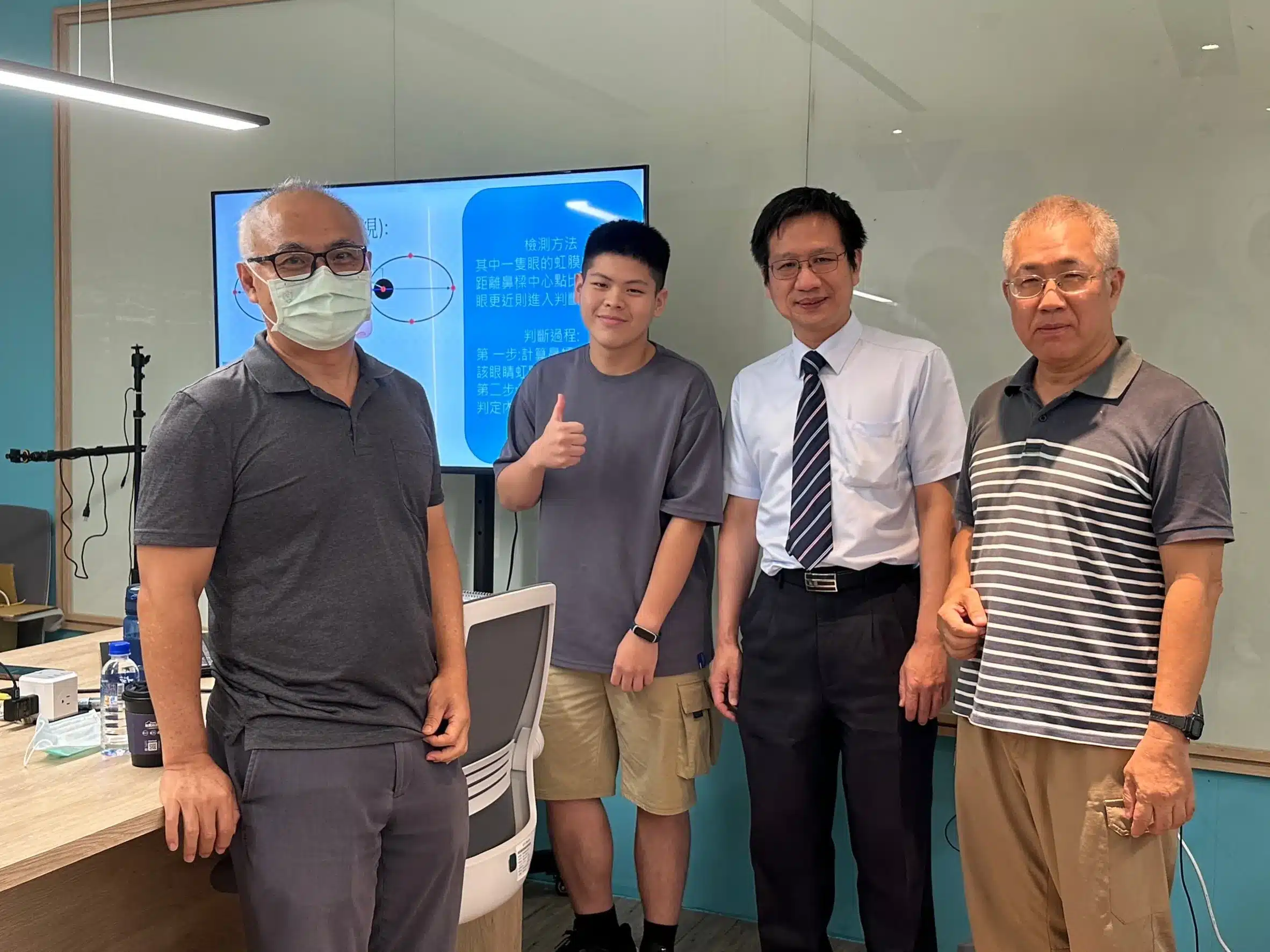
For a long time, electrical engineering has been widely regarded as a core discipline closely linked to high-tech sectors such as electronics and semiconductors. However, the Department has taken the initiative to step beyond existing boundaries by forging deep collaborations with medical colleges and various healthcare institutions. By extending its expertise into clinical care, smart diagnostics, and medical system innovation, the Department is steadily becoming an indispensable R&D hub within the smart healthcare ecosystem. Looking back at 2025, a collaborative team of faculty and students from the Department assisted Kaohsiung Medical University in developing the “Auxiliary Assessment System for Identifying Coronary Heart Disease.” This system integrates AI sublingual imaging recognition with deep learning models to assess potential coronary heart disease risks by analyzing sublingual vein image features. Distinguished by its non-invasive nature, cost-effectiveness, and ease of operation, the system earned the Clinical Innovation Award at the 22nd National Innovation Award. Furthermore, a research achievement titled “Effectiveness of Real-time Diaper Monitoring via MQTT and API for Remote Monitoring” has received high acclaim. By integrating clinical care practices, advanced technology applications, and institutional innovation, the project secured both the “Gold Quality Award” and the “Innovation Award” in the Junior Category at the 2025 Quality Improvement Achievement Competition hosted by the Taiwan Healthcare Quality Association. In the area of precision auxiliary diagnosis, ISU also exhibited its patented “ADHD Assessment System” at the 2025 Taiwan Healthcare + Expo. This system is designed with non-interventional monitoring at its core to provide a more objective diagnostic basis and to demonstrate significant potential for telemedicine applications. Dr. Jung-Ching Wu, a professor in the Department and one of the faculty members responsible for the three aforementioned achievements, noted that by participating in various competitions and achievement presentations, students can translate their classroom knowledge into practical applications. Through a process of repeated implementation, validation, and refinement, they deepen their professional capabilities. This not only cultivates problem-solving and interdisciplinary collaboration skills but also concretely realizes the educational spirit of “learning by doing.”
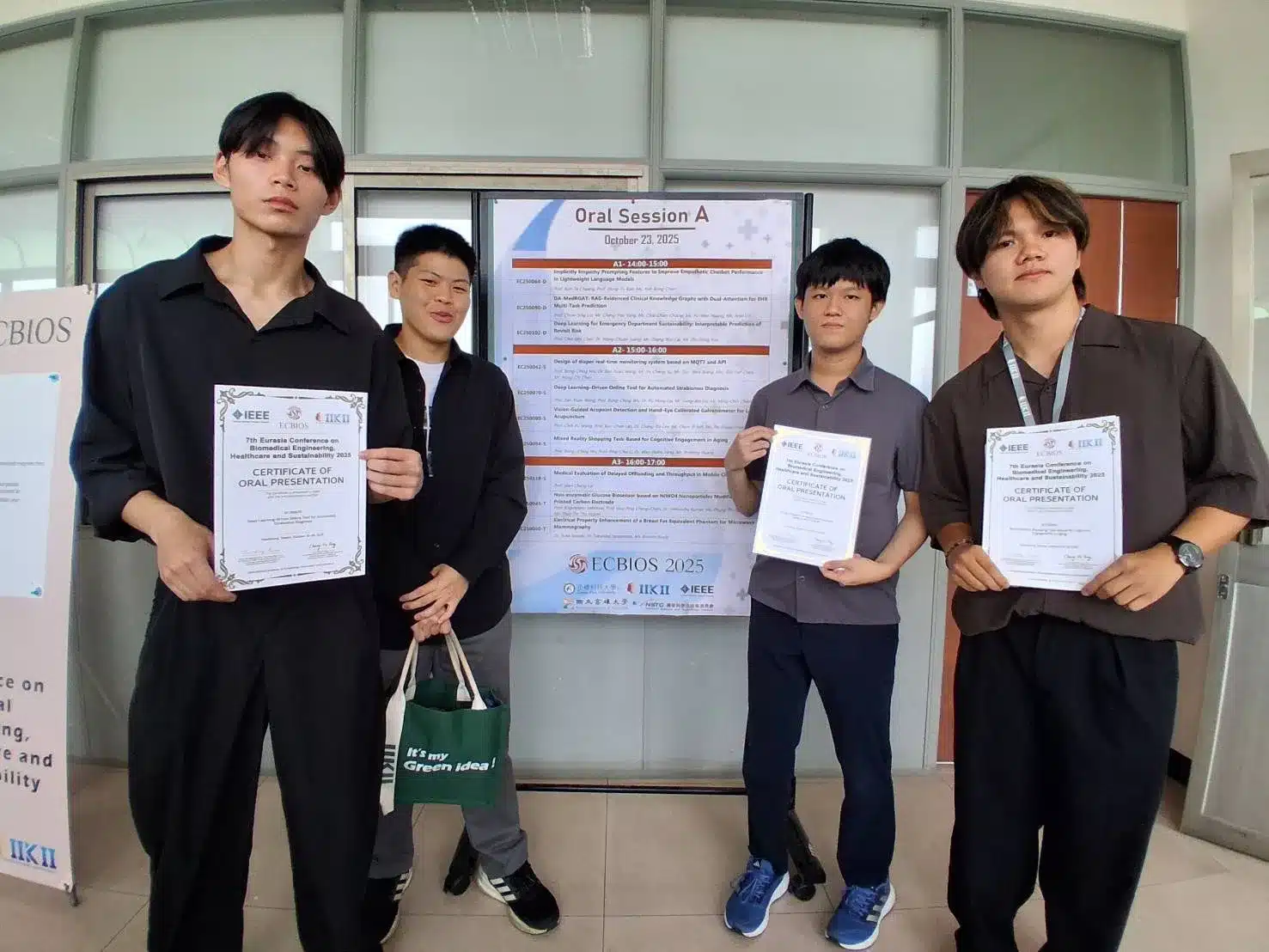
One of the key factors behind the Department’s robust, sustained development momentum is the project-based learning courses rooted in its core curriculum. In the senior project achievement exhibition for the academic year 2025, multiple student teams stood out with their solid engineering foundations and innovative applications, receiving “Top Excellence” and “Excellence” awards. Their projects spanned cutting-edge fields, including smart machinery, AI, renewable energy, optoelectronic communications, and power electronics, fully demonstrating the students’ diverse and comprehensive technical capabilities. Among them, the “Top Excellence” projects include research on obstacle avoidance control for intelligent robotic arms, solar photovoltaic power generation forecasting systems, multi-stage DC-DC converter designs, and advanced optical fiber analysis. These projects exhibit a high degree of technical maturity and demonstrate clear potential for practical application and industrial development. By serving as an essential platform for practical implementation and public presentation, the project exhibition allows students to cultivate problem-solving and interdisciplinary integration skills through a real-world, problem-oriented process. At the same time, it strengthens their “immediate job-readiness” to meet industry demands, effectively showcasing the remarkable achievements of the Department in deepening engineering education and cultivating professional talent.
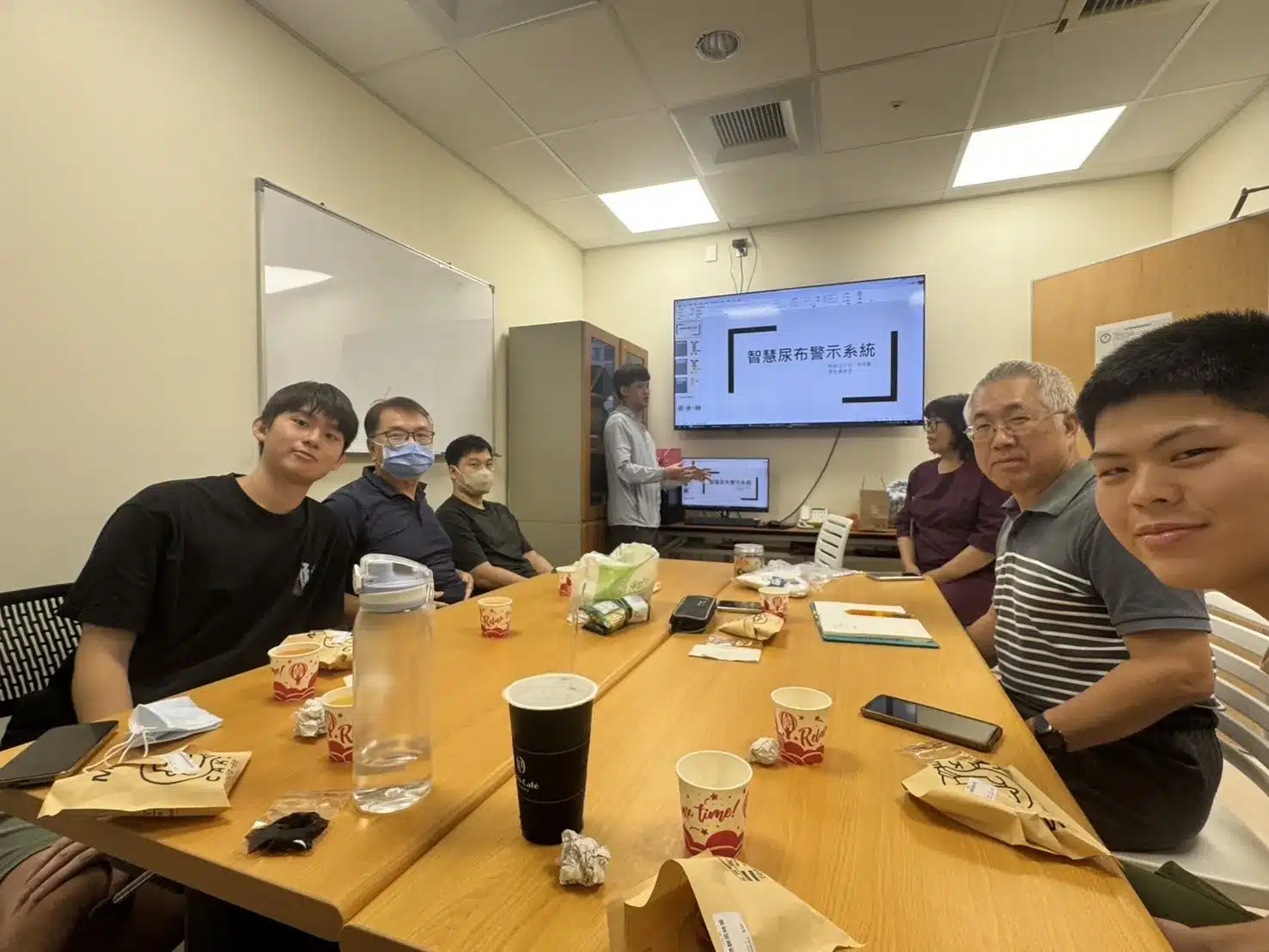
In recent years, ISU has deepened its presence in smart healthcare, consistently achieving remarkable results across various competitions and professional evaluations. Among these, the Department has played a pivotal role in providing technical support and R&D. In an era when the rapid development of AI is reshaping the global pace of innovation, ISU has chosen to stand at the forefront of innovation. By fostering collaborations between various professional departments, the university continues to deepen industry-university connections and establish clinical validation environments, ensuring that forward-looking technologies move beyond the laboratory and are effectively integrated into industrial and medical settings. With the integration of theory and practice as its core educational philosophy, ISU systematically cultivates professional talents with immediate job-readiness and practical perspectives through interdisciplinary teaching, practice-oriented approaches, and real-world validation. This not only addresses industry and societal needs but also injects steady and sustained talent momentum into the national development of smart healthcare and technological innovation.