
Professor Guych Nuryyev: Crypto And Why Economics Feels New But Isn’t
In the age of AI-driven tools, crypto markets, and constantly shifting financial trends, economics are often wrapped in layers of “advanced” tools and buzzwords. New language, new systems, new ways of talking about money. But beneath all of it, the same question keeps appearing in different forms.
At I-Shou University, Associate Professor Guych Nuryyev builds his teaching around a philosophy: modern finance only becomes clear when you understand its old basic foundations.
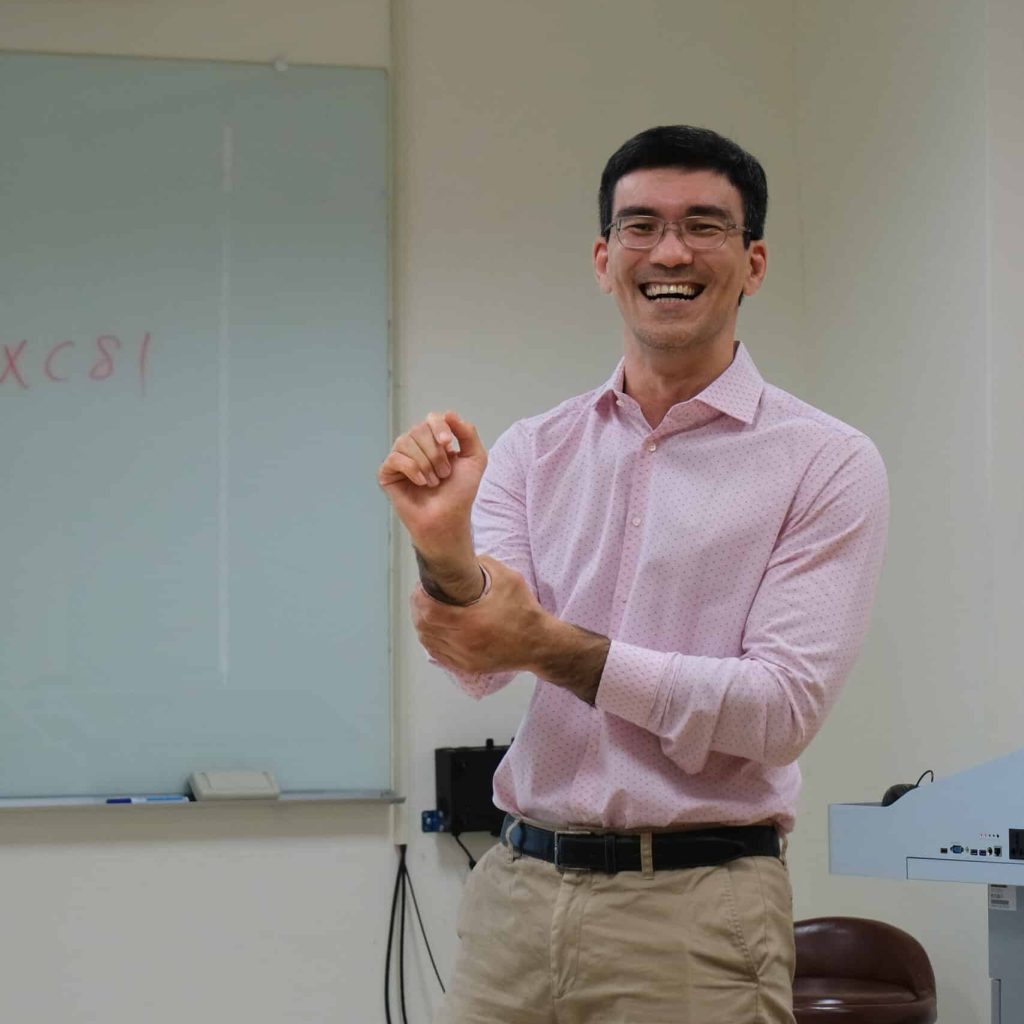
A Teacher, A Researcher, And An Investor
When Professor Guych Nuryyev introduces himself, there is no long preface.
“First, I’m a teacher. Then, I’m a researcher. And an investor.”
For many people, teaching comes later, after research and after industry experience. But for him, it was always his dream. “I always want to become a teacher.” He shared.
Long before titles or degrees, his story began at his childhood home with his cousin’s set of Russian economics textbooks. The books were there, so he read them, not fully understanding everything, not thinking too deeply about it. But it stayed in his mind since. Over time, those unfamiliar terms began to make more sense. That curiosity carried him through years of study and eventually to a PhD at Queen’s University Belfast (United Kingdom).
The Monkey Story In The Economics Class
In a field where many people layer their words with complex terms to sound more sophisticated, Professor Guych Nuryyev still loves to keep things close to the ground
To explain abstract economic ideas to undergraduate students, he often starts with simple storytelling: an island economy where monkeys trade bananas, or everyday settings such as a bakery selling bread and an ice cream shop adjusting prices based on supply and demand. These familiar scenarios help students see how economics works in real life.
What begins as a “bedtime story” gradually becomes a structured way of thinking. The examples are so vivid that they stay for years. Students may not remember every formula, but they will remember the monkeys, the bread, the ice cream, and the logic behind them.
Simplified Crypto 101
His perspective becomes clearer when the discussion shifts to cryptocurrency.
Instead of beginning with technology or speculation, Professor Guych returns to a simpler idea: money can be printed, and when too much money is printed, inflation follows. So what kind of asset cannot be easily created or expanded?
Coming from Turkmenistan, he grew up with a real sense of how inflation can shape everyday life. It is part of why, even now, his thinking in finance often comes back to two ideas: scarcity and trust.
Bitcoin captures his research interest. With a fixed maximum supply of 21 million coins, Bitcoin is often described as “digital gold.” For him, this fixed structure is what separates it from traditional currencies. At the same time, he is very direct about the wider crypto market: most digital coins are driven by speculation rather than real underlying value.
What draws his attention more deeply is the system that supports them: Blockchain changes how trust is organized and distributed across a shared system of verification. From there, smart contracts reduce another layer of dependency.
Platforms like Ethereum extend this idea further, turning that structure into decentralized applications, financial systems, and new forms of coordination. Even stablecoins like Tether (USDT) exist in this same space, connecting two worlds of digital assets and traditional currency value.
Yet, underneath all of it, the logic remains the same: how value is formed, how scarcity shapes behavior, and how incentives guide decisions. The systems evolve. But the underlying principles do not disappear.
And that is where many young people get it wrong. They are drawn to the hype, chasing what rises quickly, only to find themselves returning with little understanding of what they were actually investing in.
Old Logic Of "New Money"
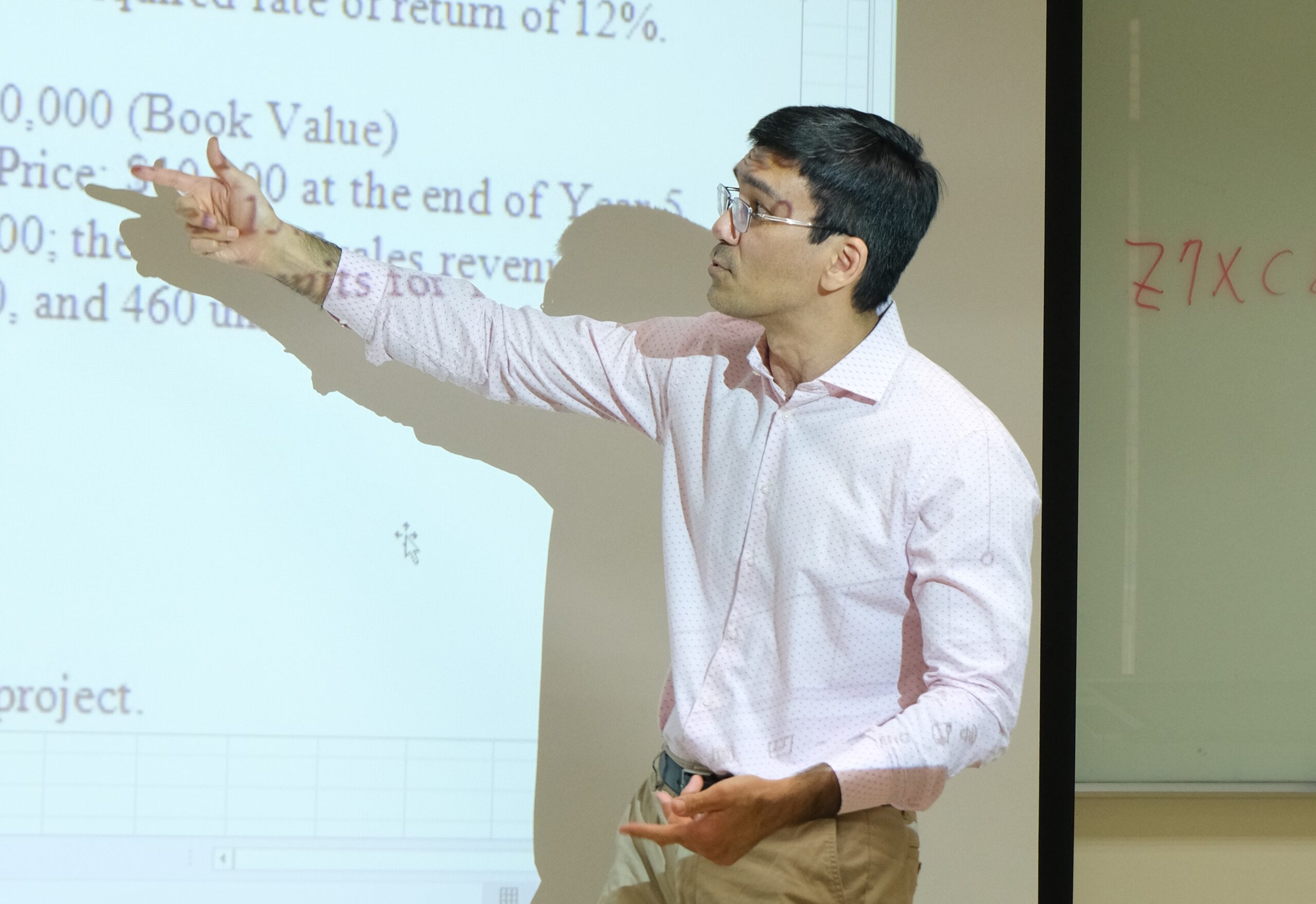
For Professor Guych, this is not only an investment problem. It reflects something more fundamental: the way people approach thinking and learning itself.
For many students, investing in crypto and other assets often feels distant or reserved for experts. Investing is something you can begin in small, early steps. If done consistently, it can grow well over time through compounding. Yet he is equally careful about what “early investment” should mean. It is not about following random trends or online advice. You have to think independently and consistently in a constantly changing world. That idea eventually brings him back to education.
“Class is like a gym,” he says. “It trains your brain.”
In class, problems come with clear answers and structured formulas. Before students can think critically or make decisions in uncertain environments, they need a base of concepts, disciplined reasoning, and the ability to solve problems step by step.
Without that foundation, there is nothing to think with in the first place. A successful person is not the one who remembers the most economic models, but the one who knows how to use them, question them, and adapt them in real financial problems and opportunities.
The key is to learn how to learn.
Dr. Guych Nuryyev