
A Medical Humanities Prescription from Halfway Across the Globe! I-Shou University Heads to the University of Düsseldorf in Germany – From Physical Therapy Professionalism to Humanities Fieldwork, Showcasing a New Vision of Holistic Healthcare
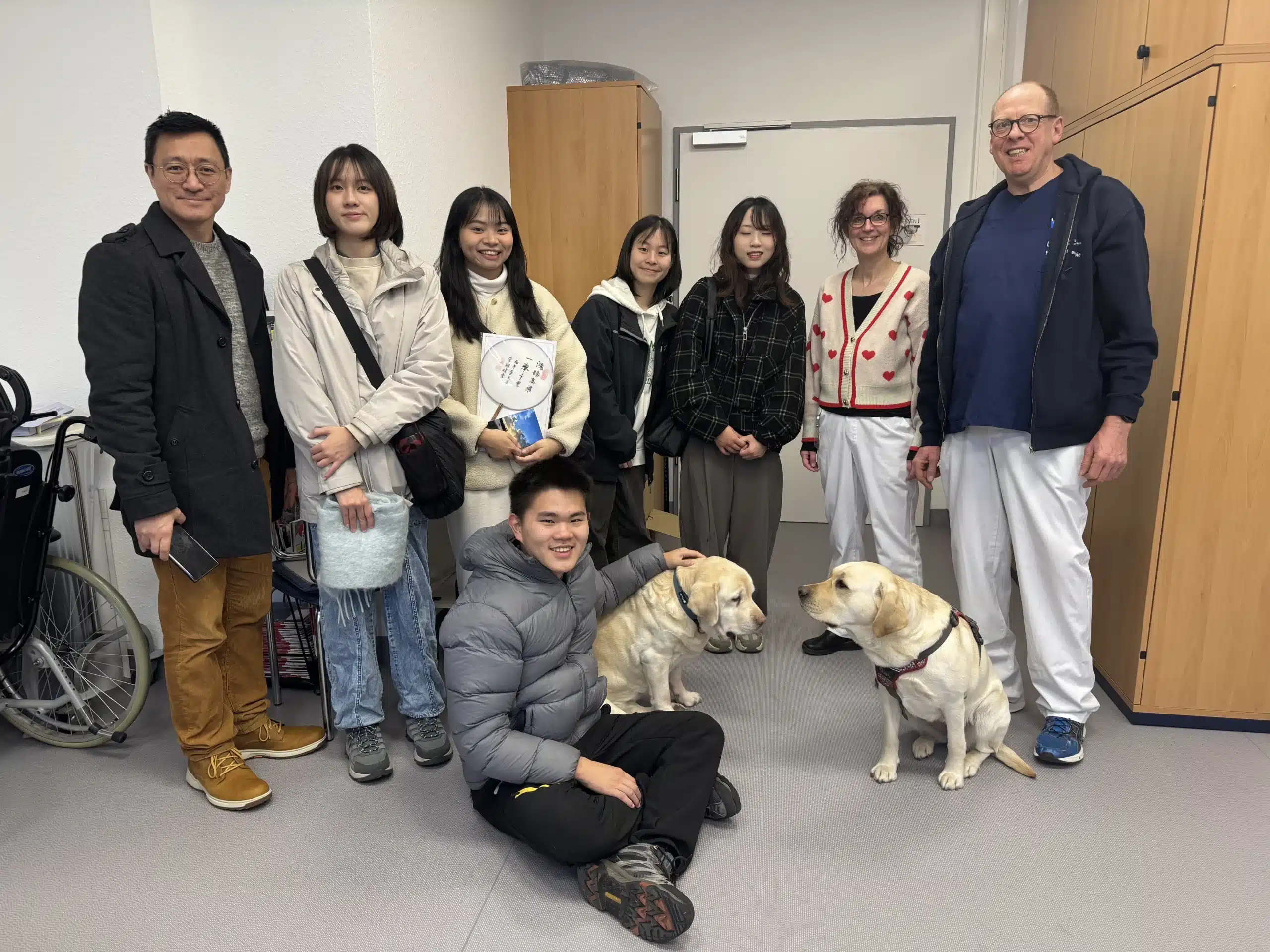
Traditional medical education is often filled with heavy original textbooks and difficult anatomical diagrams. The precision of science and the warmth of humanities are often seen as two parallel lines that rarely intersect. However, through a cross-Eurasian internship program, the College of Medicine at I-Shou University (ISU) is redrawing the new landscape of medical talent cultivation for the new generation. This January, supported by the Ministry of Education’s Study Abroad program and the General Education Independent Dream-Building Program, Teacher Lin Kuan-Chun from the ISU Department of Medicine led five outstanding students from the Department of Physical Therapy on a one-month interdisciplinary internship to the 400-year-old University Hospital Düsseldorf (UKD) in Germany. This trip not only broke through the framework of traditional medical education but also guided students from the academic context of century-old Nobel Prize manuscripts to humanistic care in hospice wards, clinical practices in the trauma department, and all the way to cross-cultural street interviews, gradually refining their holistic medical literacy that combines professional competence with a macroscopic social vision.
From Nobel Prize Manuscripts to Medical Ethics in the AI Era
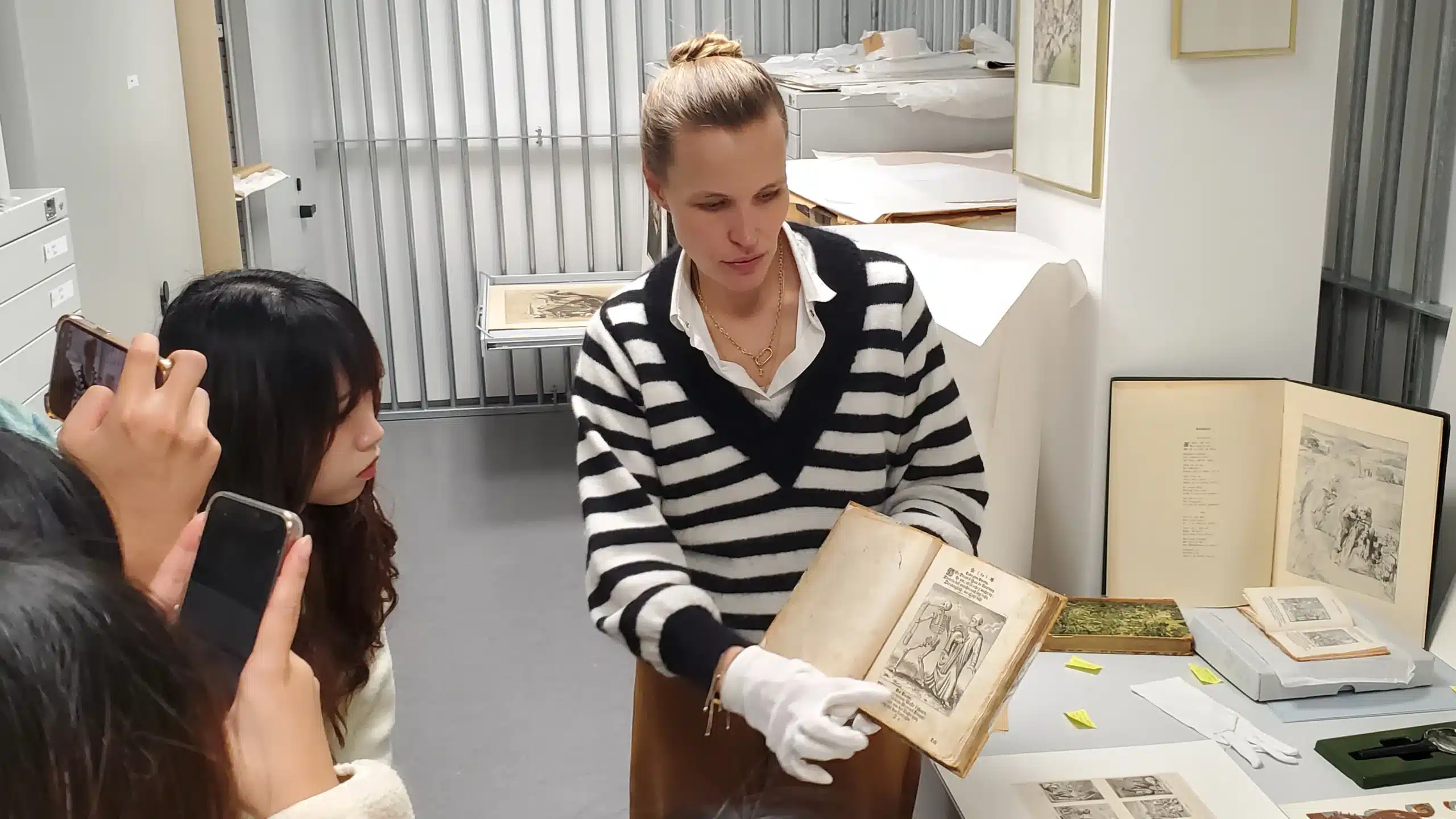
Unlike traditional internships that mostly enter clinical wards directly, the first stop for this internship team was specifically arranged at the “Institute for the History, Philosophy and Ethics of Medicine,” which is rich in academic heritage. Here, students temporarily stepped away from the tense rhythm of the clinical frontlines to personally touch precious medical manuscripts and artworks preserved since the 16th century. They also participated practically in the maintenance of historical research materials and manuscripts related to Sir John C. Eccles, the 1956 Nobel Laureate in Physiology or Medicine, re-understanding the deep significance of medical development within historical and humanistic contexts.
Under the guidance of experts, the ISU students transcended time and space boundaries, reflecting on contemporary highly scrutinized medical ethics from the depths of history. Through thematic discussions, team members further explored how to clarify responsibilities in medical disputes in today’s booming AI technology era, the ethical issues arising from AI-assisted diagnosis, and the human ethical controversies that may be triggered when AI is applied to the care of dementia patients. Through systematic ethical reasoning and the clash of diverse perspectives, they not only deepened their understanding of the essence of medicine but also gradually overturned the traditional Taiwanese student learning model of “seeking standard answers,” internalizing critical thinking as an important core of professional development.
A Pediatric Rehabilitation Department Without the Smell of Disinfectant and a Colorful Hospice Ward
Entering the clinical sub-specialty internship phase, observation and experience in the pediatric physical therapy department allowed the student team to deeply feel the professional realm of the German healthcare system, which integrates “rigor” with “gentleness”. Different from the cold and hard atmosphere of traditional clinics, the department’s spatial design incorporates a rich childlike charm, with walls hung with photos of plush toys taken at famous landmarks around the world, creating a warm and imaginative healing environment. These ingenious touches not only open a window to the world for severely ill children who are hospitalized long-term and cannot go out, but also invisibly soothe their fear and resistance to rehabilitation and treatment, making the medical process both professionally effective and humanistically caring.
Behind this warm humanistic care lies an almost rigorous professional persistence. The department treats patients ranging from premature babies in incubators to 18-year-old adolescents. For therapists, this requires not only solid developmental knowledge but also highly precise clinical technical capabilities. What impressed the students most was their uncompromising professional attitude. The clinic is equipped with a large ball pit providing tactile stimulation. Whenever a child patient finishes using it, the therapist must personally conduct a comprehensive cleaning and disinfection, individually processing thousands of plastic balls, soft mats, and related equipment to ensure that the immunocompromised children are always in a safe and secure treatment environment. In addition, the German peers of the same age who led them showed a high degree of participation and responsibility in their clinical work. Their rigorous and precise execution also brought profound inspiration to the ISU students, further prompting them to reflect on the direction and standards of their own professional development.
What moved the team members even more was the profound shock upon entering the hospice care ward. Student Hua Hsin-Min recalled: “What greets the eye is not cold medical equipment, but colorful paintings jointly created by patients and art therapists. Such an environment allows patients to maintain the rhythm of ‘normal life,’ feeling respected and understood even in the final stages of life.” German hospice wards even have exclusive gardens, allowing terminally ill patients to share peaceful and precious moments with their families in the sunshine and breeze. This delicate guardianship of life’s dignity made these future physical therapists deeply realize: healing may ultimately face its limits, but the warmth carried by care and companionship can extend infinitely.
Social Practice Outside the Ivory Tower: Observing Sustainable Living and Street Issue Interviews
The footprints of this internship were not confined within the high walls of the hospital. The action-oriented ISU students transformed theories of medical sociology into concrete practice, walking into the streets of downtown Düsseldorf to conduct street interviews and record the local public’s daily practices of environmental sustainability on video. From the highly popular organic foods in supermarkets to the bottle deposit recycling system implemented in every household, they gradually realized that public health and environmental sustainability are never just policy slogans, but collective habits deeply rooted in the details of daily life. Student Li Yen-Yu also shared: “This internship was not just a learning journey of clinical skills, but also a profound cultural and institutional shock education. Germany’s ‘solidarity society’ (Solidargesellschaft), based on ‘high welfare, high taxes,’ has built a friendly environment where all citizens can maintain their dignity.”