
TEDxISU 2026 - Journey for Tomorrow | "Environment Shapes Us, But Doesn't Decide Us" - Tia Sembiring
“A child is a product of their environment.”
Most of us have heard that line enough times that it has started to feel like fact. It sounds reasonable, even scientific. If you grow up with opportunities, you succeed. If you grow up with limitations, you struggle. Clean, predictable, and almost comforting in how neat it makes the world seem.
But Tia Sembiring, a sophomore studying International Business Administration at I-Shou University, opened her talk at TEDxISU 2026 by poking a very specific hole in that idea: if environment fully determines who we become, then how do we explain the exceptions?
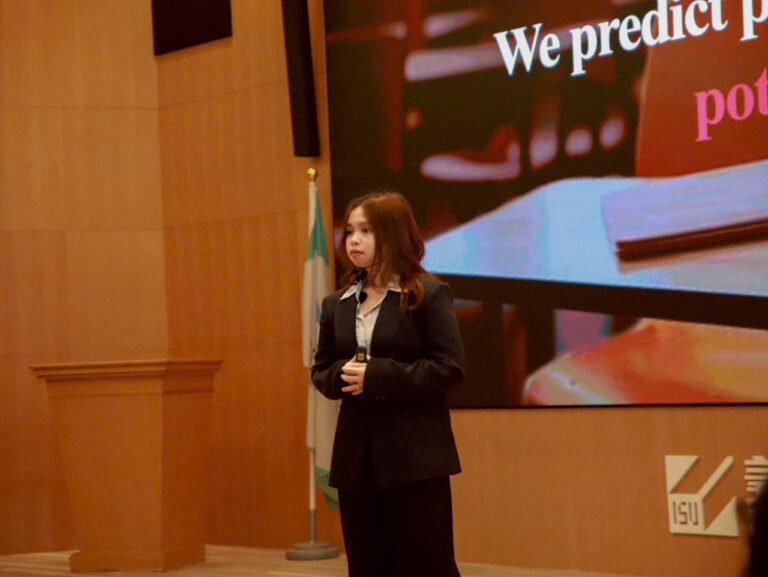
The village, the expectation, and the message she kept hearing
Tia grew up in a small, traditional village in Indonesia, far from the city, where opportunities felt distant but expectations felt very close, especially for women. The message she heard again and again was some variation of the same warning: do not study too much. A woman who becomes too educated becomes intimidating, difficult, out of place. It was not said once as a suggestion. It was repeated, reinforced, woven into the fabric of daily life until it started to feel less like an opinion and more like a rule. Education, in that environment, was not just learning. It was seen as a risk.
Getting anywhere required long walks just to reach transportation. Social issues in the community were serious. Support for ambition was rare, and judgment was common. Even when Tia achieved something academically, it was not always celebrated. It was questioned, measured, and quietly weighed against what people had already decided she was supposed to become.
At some point, she said, it felt like her future had already been written for her.
She did not accept it. Not because she was fearless, but because something in her refused to believe the story was already finished.
Environment explains where we begin, not where we end
That refusal is the center of her argument, and it is more nuanced than simple optimism. Tia is not dismissing the reality of unequal starting points. Not everyone begins with the same access, and she was clear that this matters. But she pushed back on what happens when the environment becomes the only lens through which we see people: we stop seeing them as possibilities and start seeing them as outcomes. We label students early. We quietly decide what someone is capable of based on their background, their gender, their location. And the people on the receiving end of those assumptions, if they hear them enough, begin to believe them too.
When she had the opportunity to study abroad, she encountered a world where ambition in women was not something to hide but something to be proud of, where education did not threaten belonging. That contrast made something clear to her that she brought to the TEDxISU stage: environment explains where we begin, but it does not decide where we must end.
"A child is influenced by their environment, but defined by how they respond to it."
Tia Sembiring
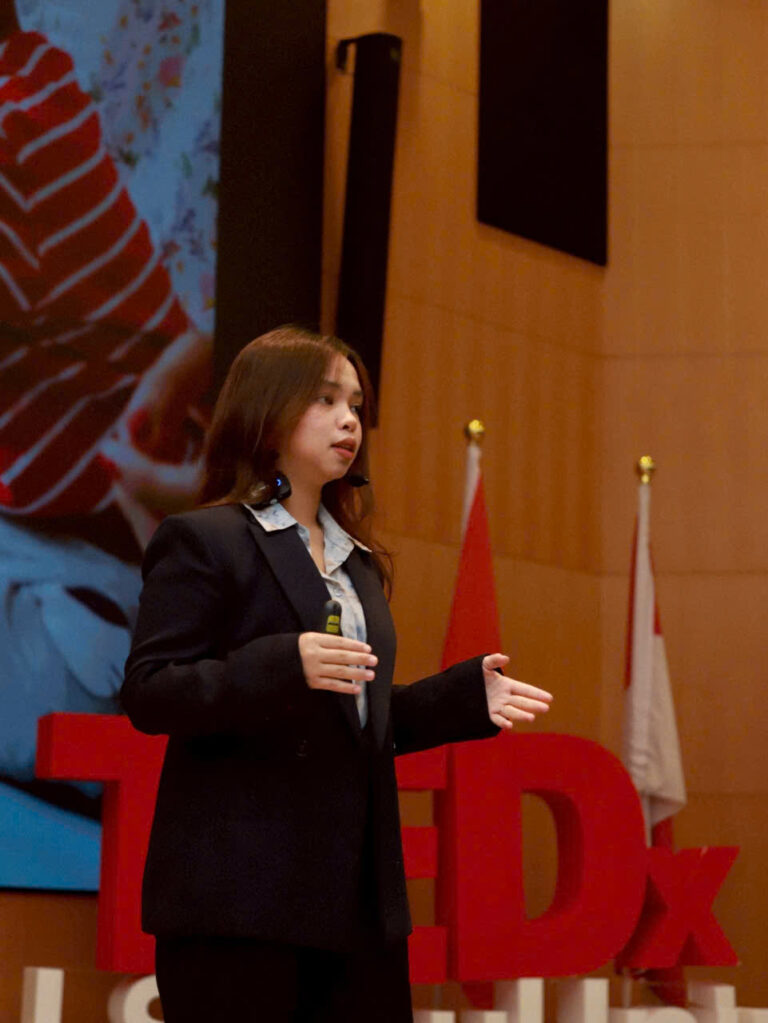
The part we do not talk about enough
Two people can stand in the same storm, she said, and walk away as completely different people. One becomes bitter. The other becomes resilient. Same storm, different story. The difference is not the circumstances. It is the response.
That distinction matters because beliefs shape reality, not just reflect it. When a person is told they cannot, that becomes a boundary. When the assumption is that they will not, that becomes a limitation. But when someone is told they can choose, that they can respond, that they are not finished yet, that becomes a possibility. And people who believe they have no control tend to stop trying, stop imagining, stop becoming.
"Because when people believe they have no control, they stop trying. They stop imagining. They stop becoming."
Tia Sembiring
This is where Tia widened the conversation beyond her own story. She turned it into a question for everyone in the room: what kind of environments are we creating, not just physically, but psychologically? Because the environments we build around other people, through the assumptions we make, the labels we assign, the ceilings we quietly install, shape what those people believe is possible for themselves.
You are a participant in your future
For a room full of international students at I-Shou University, many of them far from home and navigating systems that were not built with their specific backgrounds in mind, the talk landed close. The experience of being underestimated, or of carrying expectations that feel more like restrictions, is not unfamiliar here.
Tia closed with the reframe she had been building toward the entire time.
"You are not just a product of your past. You are a participant in your future. Your environment may write the first chapter of your story. But after that, you still hold the pen."
Tia Sembiring
It was a quiet ending for a talk that earned it.
So here is the question she left in the room, and the one worth sitting with long after: is your environment currently shaping you, or are you shaping it?