
ISU Empowers Industry Innovation and Social Value through Globally Competitive Interdisciplinary Engineering Excellence
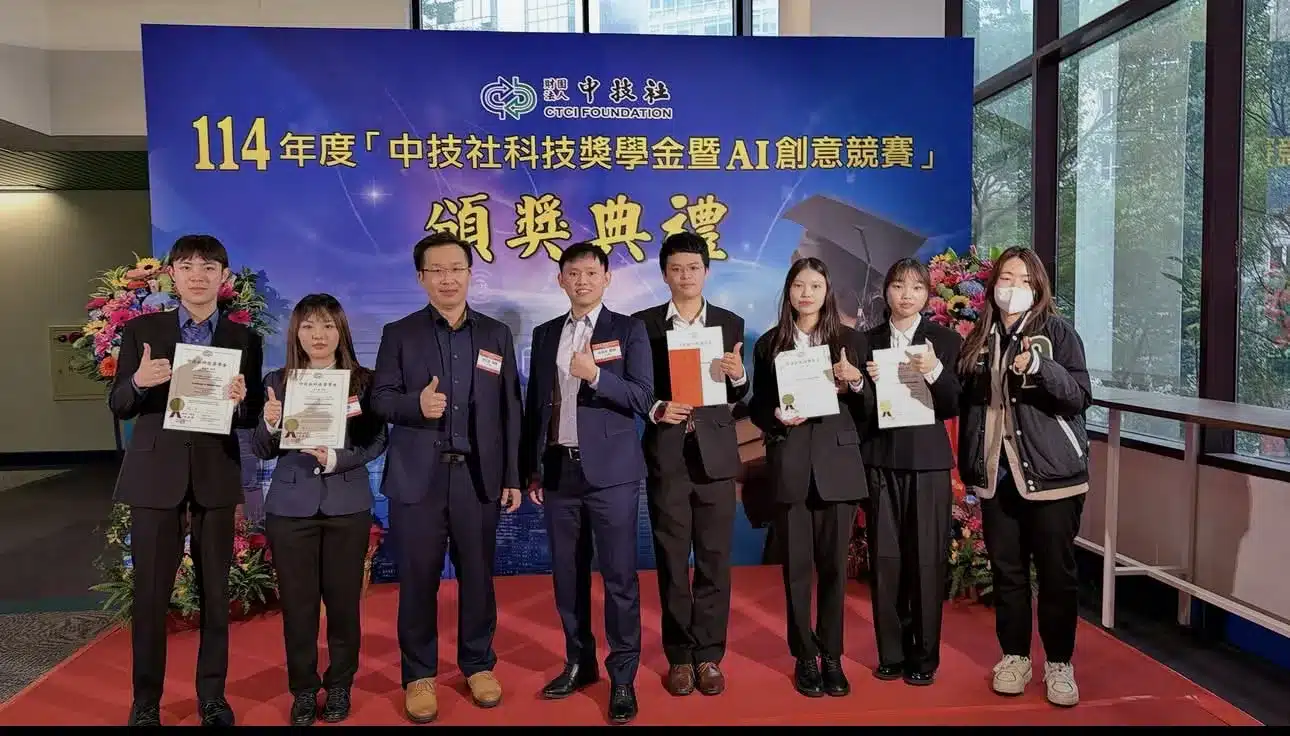
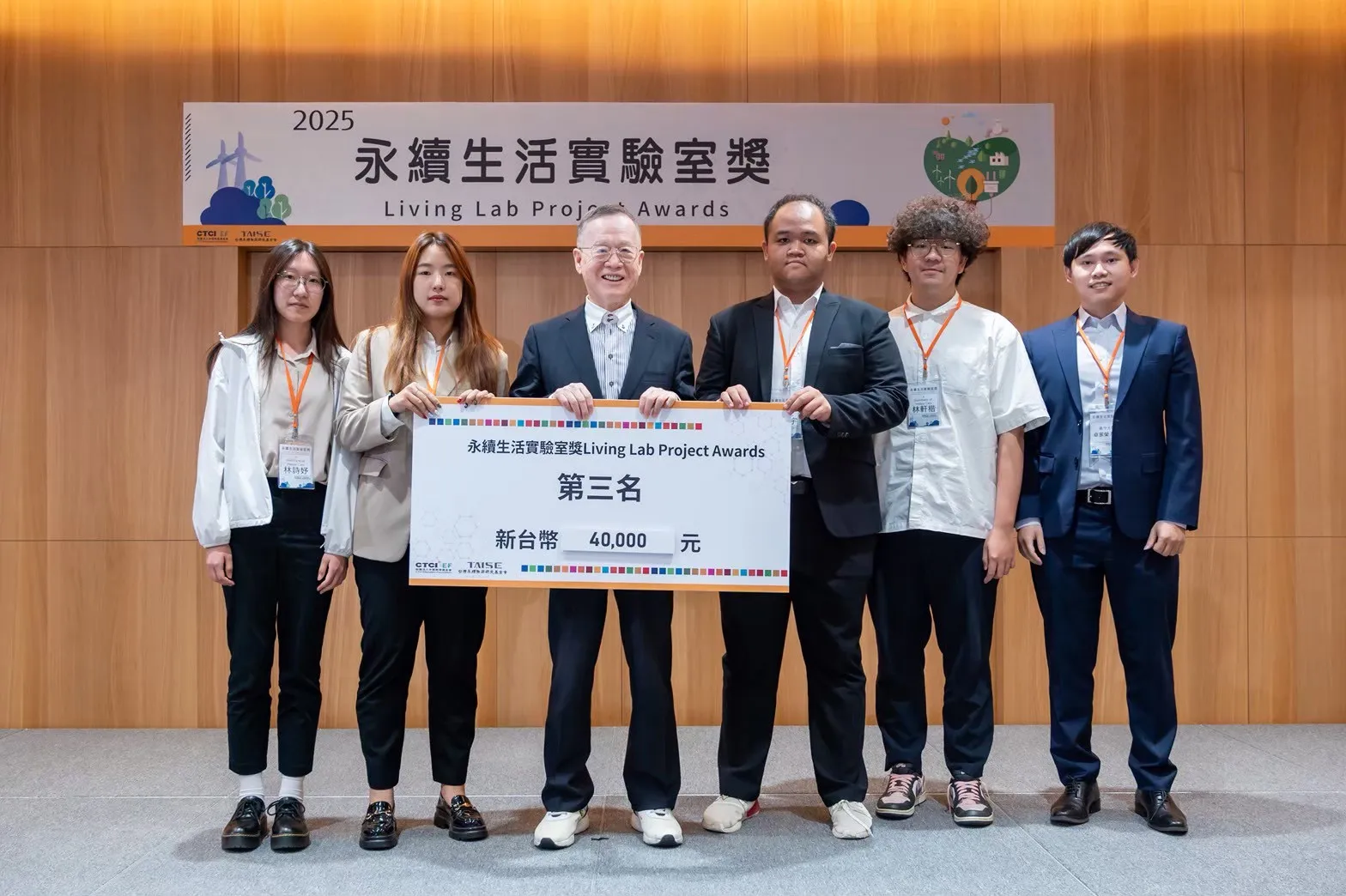
The Department of Chemical Engineering at ISU has achieved stellar success at the 2025 CTCI Foundation Science and Technology Scholarship Award Ceremony. Outshining 64 student teams from 27 universities across Taiwan, the ISU group showcased exceptional research prowess and innovative drive. Under the guidance of Professors Chia-Jung Cho and Ming-Chia Hsieh, Hsu-Jen Chen, Yi-Ju Lu, Mei-Chen Li, Che-Wei Hu, and Ya-Hsuan Chen were honored with the Creative Award and a NT$150,000 prize for their project, “Application of Hollow Fiber Ultrafiltration Membrane Technology in Semiconductor Fab Wastewater Treatment.” The award-winning research addresses the semiconductor industry’s most pressing environmental challenges, specifically high water consumption and wastewater discharge. By leveraging hollow-fiber ultrafiltration membrane technology, the team developed a highly viable and sustainable water-recycling solution. This initiative not only addresses industry pain points but also aligns with global conservation and emissions-reduction goals, garnering unanimous acclaim from the judging panel.
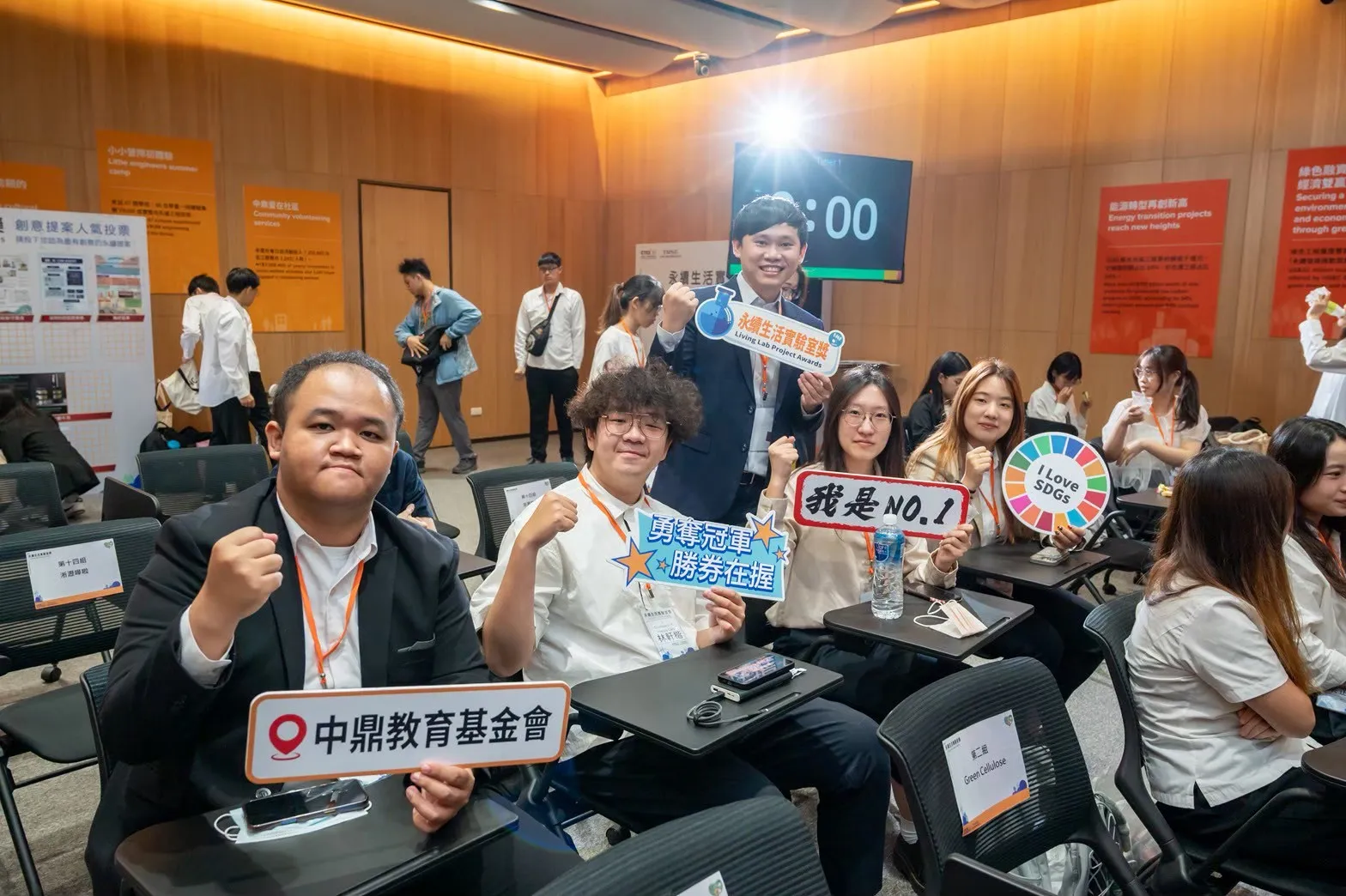
In addition to the stellar results at this year’s CTCI Foundation Science and Technology Scholarship competition, the Department of Chemical Engineering continues to build a strong track record in academic contests both at home and abroad, reflecting its robust research and teaching culture. At the 72nd Annual Meeting of the Taiwan Institute of Chemical Engineers and the International Symposium on Chemical Engineering (Taiwan-Japan-Korea), Professor Cho led a student research team that bested over 940 other submissions to earn two Honorable Mentions. The winning projects, “Conductive MXene Nanocomposite Fibers for Robotic Skin Sensing” and “Sustainable Adsorption Applications of PLA/RHA Composite Nanofibers in Oil-Water Separation,” span the fields of AI sensing and environmental materials, showcasing ISU’s expertise in interdisciplinary R&D. Furthermore, at the 73rd Annual Meeting of the Taiwan Textile Institute and the 41st Conference on Fiber and Textile Science and Technology, ISU students secured two Excellence Awards for oral presentations and one for a poster presentation. These forward-looking studies on wearable sensors, high-value agricultural by-products, and energy materials underscore the students’ readiness to transform academic research into viable solutions that meet real-world industry demands.
According to the Department of Chemical Engineering, these research achievements transcend mere laboratory breakthroughs; they represent a transformative learning journey in which engineering expertise is applied in real-world contexts. The department has long cultivated a pedagogy that encourages students to draw inspiration from industry demands, environmental challenges, and local community needs, prompting them to consider how technology can be practically implemented to drive meaningful change. Through a diverse curriculum and practice-oriented research projects, students learn to integrate material development, process technology, and intelligent applications into tangible and viable solutions that address critical issues, such as environmental sustainability, industrial transformation, and social development. This approach ensures that engineering education at ISU goes beyond the pursuit of academic results, instead fostering a deep understanding of the public responsibility and social value inherent in technological progress.
Furthermore, the Department of Chemical Engineering is accredited by IEET, underscoring its dedication to preparing graduates with global perspectives, professional ethics, and cross-functional integration skills. While the chemical and materials industries remain traditional career paths, the surge in semiconductors, green energy materials, biomedical engineering, and smart manufacturing has significantly expanded the profession’s horizons. Benefiting from its strategic location within southern Taiwan’s S-shaped semiconductor strip, the department utilizes deep-rooted industry ties to transform its students into essential talents for the technology supply chain. Moving forward, the Department of Chemical Engineering will maintain its focus on material innovation, sustainability, and innovative applications. By cultivating a new generation of engineers who drive global impact, the department aims to ensure that the chemical engineering profession serves as a pivotal force aligning technological progress with social empathy.