
TEDxISU 2026 - Journey for Tomorrow | "AI Fear Is Not New: A 200-Year Pattern We Keep Forgetting" - Krishna Anoop
What happens when the technology we fear is the same one writing our presentations?
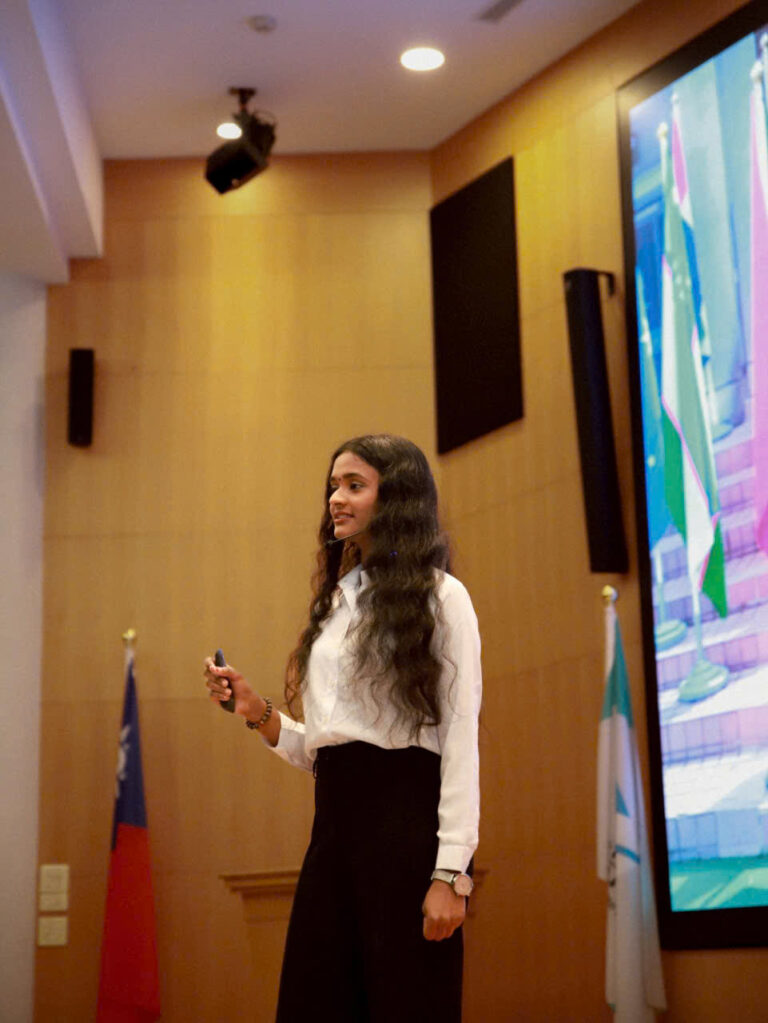
That was the question Krishna Anoop placed at the center of her talk at TEDxISU 2026, and she did not ease into it. Before saying anything else, the sophomore from India studying the International Program of Artificial Intelligence at I-Shou University told the audience upfront: AI organized her content, structured her argument, and fixed her grammar. She was the only part of the presentation that AI hadn’t replaced yet, and that, she said, was exactly the problem. It was a deliberately uncomfortable way to start, but it set up everything that followed.
A fear that keeps getting recycled Krishna’s core argument is historical.
The anxiety around AI taking jobs is real, she acknowledged, but it is not new. What we are experiencing now is the latest chapter in a pattern that has repeated itself for over 200 years, and she walked the audience through it methodically.
In 1811, a group of English textile workers known as the Luddites began smashing factory machinery because they believed mechanized looms would permanently wipe out their livelihoods. Factories were burned, the British government deployed the army, and the fear was serious enough to reshape national policy. But employment in the British cotton textile industry did not collapse. It grew, from around 350,000 to 800,000 workers, as new roles like machine operators and supervisors emerged alongside the technology.
The same story played out with electricity in the late 1800s, with the automobile in the early 1900s, and with computers in the 1980s. Each wave arrived with warnings of mass unemployment, and each time, the jobs that disappeared were outnumbered by the ones that appeared in their place. The challenge, Krishna argued, was never really job loss. It was a job transition.
So why does AI feel different?
Krishna did not dismiss the concern. AI is different from previous waves in one significant way: it is entering cognitive work, touching writing, reasoning, and decision-making in ways that feel more personal than any technology before it. It is not replacing hands anymore. It might be replacing thinking.
But even here, the early signals look familiar. Roles like AI specialist, data scientist, and prompt engineer barely existed a decade ago, and the World Economic Forum estimates that while around 85 million jobs may be displaced, approximately 97 million new roles could emerge in their place. That net positive number sounds reassuring, and Krishna made a point of not letting it land that way.
"We cannot ignore the 85 million people who will need to reinvent themselves. That is where our responsibility lies."
Krishna Anoop
The math works out on paper. The transition falls on real people.
Closer to home than we think
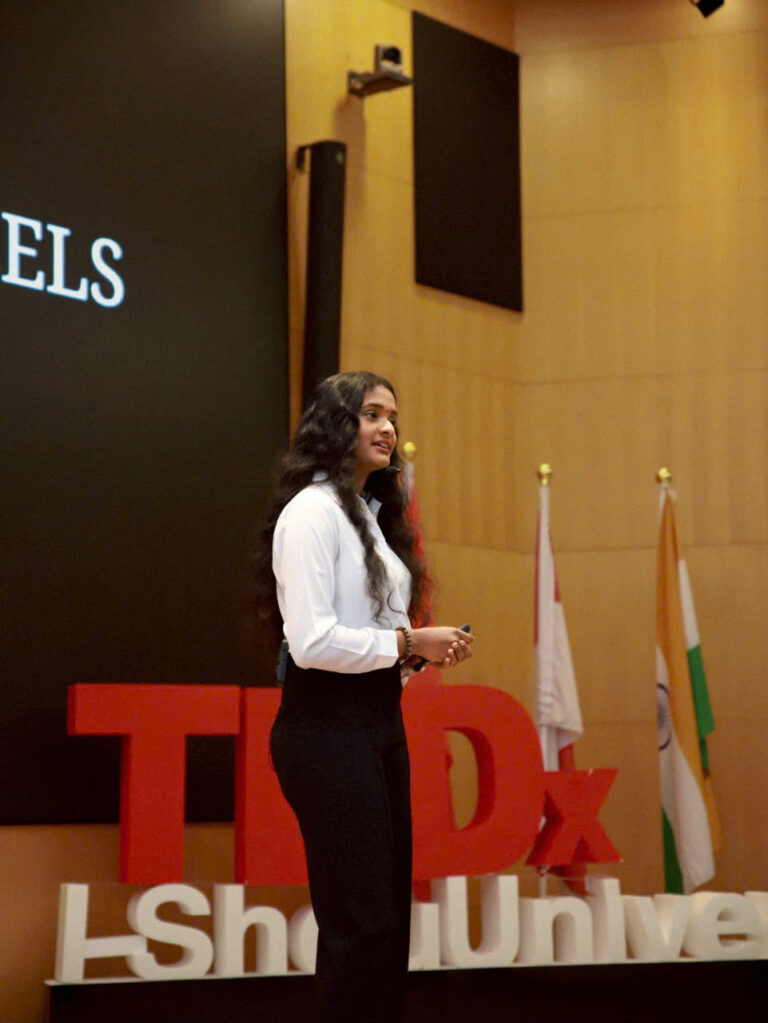
For students at I-Shou University, this is not an abstract debate. Walk through the International Program of Artificial Intelligence and you will find people doing exactly what Krishna described: learning to work with intelligent systems, not just learning about them, because the demand for those skills is already here rather than arriving sometime in the future.
Krishna, navigating both a new country and a new field as an international student in Taiwan, sits at a particular intersection of this shift. She uses AI to practice Chinese, getting feedback instantly and without the self-consciousness that comes with making mistakes in front of others. She uses it to figure out what to cook with whatever is left in her fridge. Small things, but they point to something larger: AI is already woven into how her generation studies, communicates, and solves everyday problems, on campus and off.
It is a line that lands differently when you are sitting in a classroom at I-Shou, surrounded by classmates who chose the same path. The question for all of them is not whether AI will change the job market, because it already has. The question is what they are doing right now to be ready for it.
"If AI didn't exist, my major wouldn't exist."
Krishna Anoop
It is a line that lands differently when you are sitting in a classroom at I-Shou, surrounded by classmates who chose the same path. The question for all of them is not whether AI will change the job market, because it already has. The question is what they are doing right now to be ready for it.
The question worth asking
Krishna closed by reframing the whole conversation with a simple shift in language: stop asking “Will AI take my job?” and start asking “Will we adapt in time?” The first question, she argued, history has already answered. Every major wave of technology displaced work and created more of it. The second question is still open, and the students in that room, the ones studying AI at a university in Taiwan, are already in the middle of answering it.
"The future of work is not written by AI. It is written by the people who learn how to use it."
Krishna Anoop
That might be the most honest thing said on stage all day.